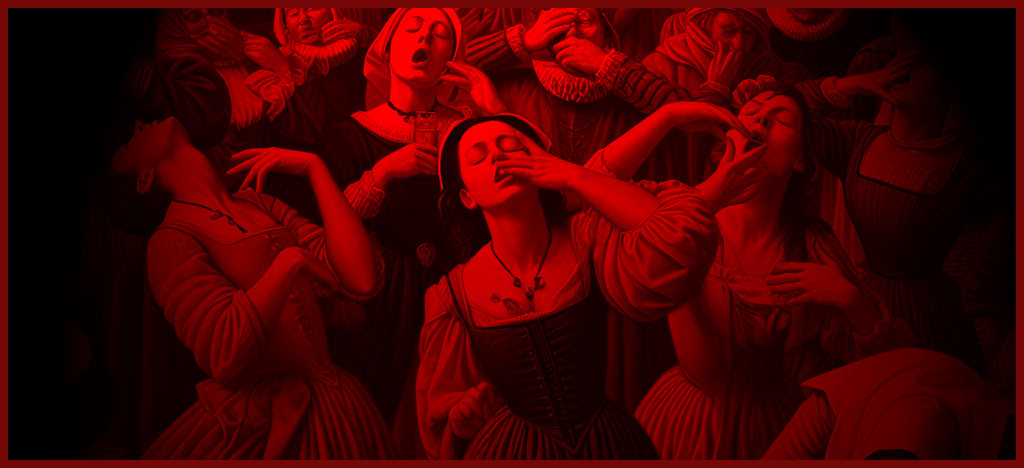
The Dancing Plague of 1518: What Happened?
The Dancing Plague of 1518, also known as the ‘dance epidemic’, remains one of history’s most perplexing events.
Occurring during the medieval period, this phenomenon took place in Strasbourg, Alsace (now part of modern-day France). Participants experienced an uncontrollable compulsion to dance, leading to exhaustion and, in extreme cases, death.
Frau Troffea’s Spontaneous Dance
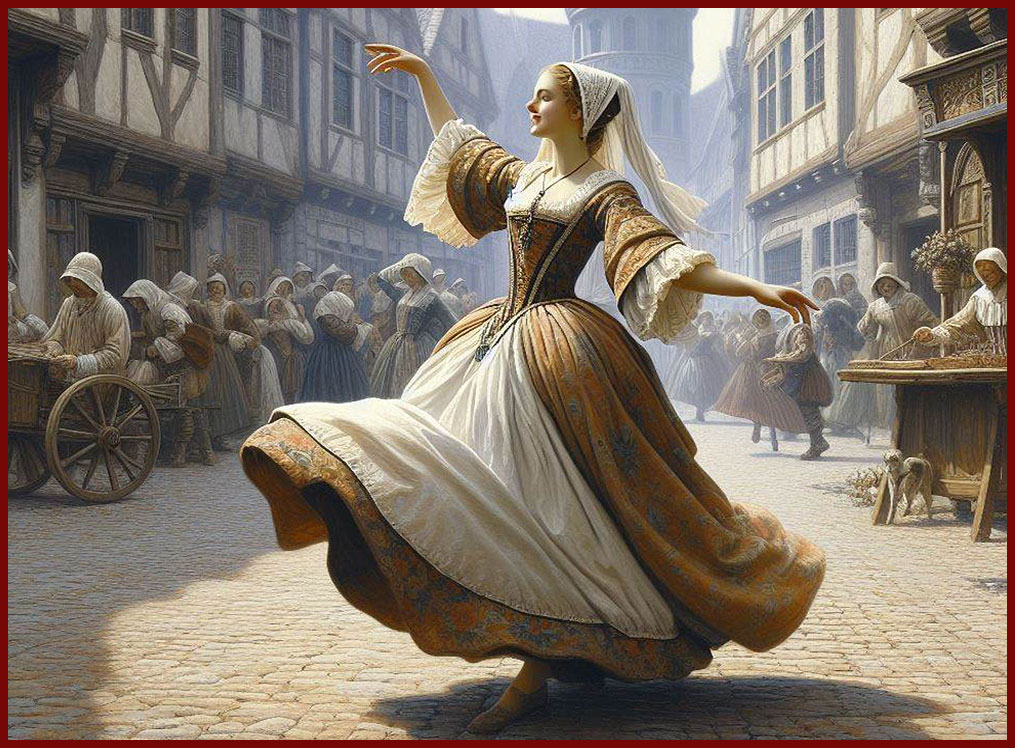
The outbreak began in July 1518 when a woman named Frau Troffea stepped into a street in Strasbourg and began dancing fervently and uncontrollably. She seemed unable to stop, and she kept dancing until she collapsed from exhaustion. After resting briefly, she resumed her compulsive frenzied activity. Within a week, more than 30 other people were similarly afflicted.
The Contagion Spreads

City authorities were alarmed by the ever-increasing number of dancers. Their solution? More dancing. Guildhalls were set up for the dancers to gather in, musicians accompanied their movements, and professional dancers helped the afflicted continue their dance. However, this approach only exacerbated the contagion. As many as 400 people eventually fell victim to this mysterious compulsion, with some even dying from their exertions.
Theories and Explanations

Numerous theories have been proposed to explain the Dancing Plague:
1. Stress-Induced Mass Hysteria:
Historian John Waller suggests that stress-induced mass hysteria played a role. The intense social pressures and anxieties of the time may have triggered this collective behaviour.
2. Ergot Contamination:
Investigators in the 20th century speculated that those affected might have consumed bread made from rye flour contaminated with ergot, a fungal disease known to produce convulsions.
3. Demonic Possession and Overheated Blood:
Contemporary explanations included demonic possession or overheated blood as causes.
4. Heretical Sects:
American sociologist Robert Bartholomew posited that the dancers were adherents of heretical sects, dancing to attract divine favour.
The End of the Mania
By early September, the mania began to subside. The afflicted dancers were sent to a mountain shrine to pray for absolution. They wore red shoes sprinkled with holy water and held small crosses in their hands while performing incantations – a ritual believed to free them from their affliction.
A Historical Enigma
The 1518 event was thoroughly documented and probably the last of several such outbreaks in Europe between the 10th and 16th centuries. While we may never fully understand why this dancing plague occurred, it remains a fascinating chapter in our collective history.

© Colin Lawson Books